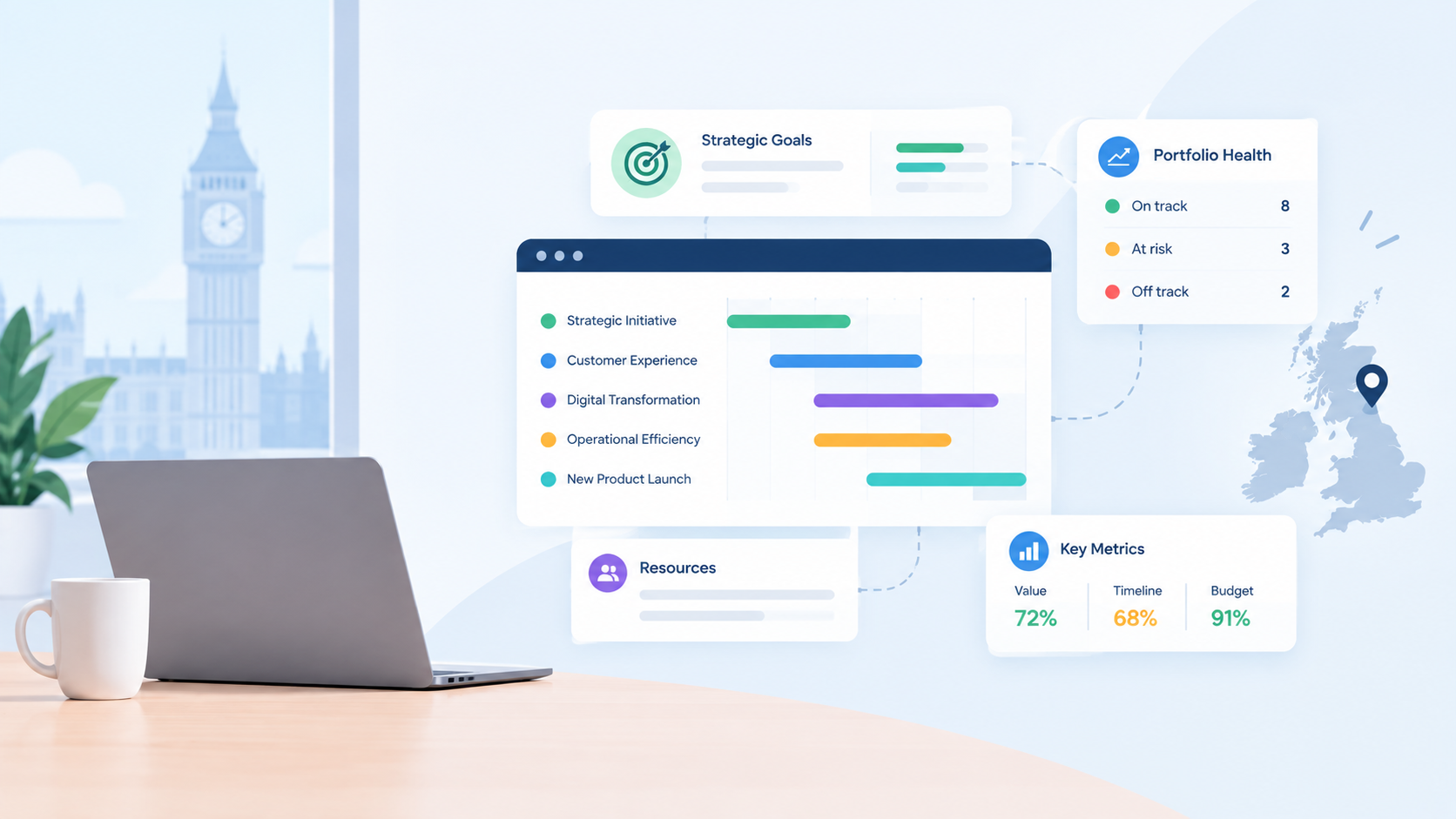

For an organisation to succeed they must have portfolio visibility. They may have a weekly status report, a manually crafted colour-coded spreadsheet, and maybe even a dashboard that shows everything is amber. That is not visibility.
Visibility means knowing, in real time, which projects are at risk, which are misaligned to strategy, and which need the attention of the executive. Most project management tools cannot show you that - they were never intended to.
Why Status Emails and Spreadsheets Are Not Visibility
When portfolio data lives in disconnected systems, the PMO spends its week assembling a snapshot view, which then gets emailed to a growing list of people. Many systems, extracts to spreadsheets, days of manual consolidation but still only a report that is accurate as of last Friday.
By the time that report reaches the board, two things have happened: the situation has changed, and the PMO has spent its most valuable hours doing administration rather than analysis.
That is not visibility, real visibility is live. It does not require assembly, it does not age between Monday and Thursday. It is the same answer at 9am on Monday as it is at 4pm on Friday because it is pulling from a single, connected source of truth.
What Portfolio-Level Visibility Actually Requires
To see clearly across a portfolio, you need several things in one place:
RAG status aggregated across all active projects, surfaced automatically rather than reported manually.
Budget versus actual spend by portfolio and programme, showing where money is being consumed against what was planned.
Resource allocation and over-utilisation flags, which team members are at risk of burnout, and which projects are competing for the same people.
KPI health is tied to strategic objectives, so a project's status is visible not just in terms of delivery, but in terms of whether it is moving the metrics it was funded to move.
Projects at risk — surfaced proactively, before they appear in a status meeting as a surprise.
When these live in separate systems, the PMO is always behind. When they live on one platform, you have a powerful system for connecting strategy to execution.
The Transparency Problem Most Organisations Will Not Admit
Real portfolio visibility surfaces things organisations have been avoiding. Projects consuming resource with no visible link to a strategic goal. Teams over-allocated to work that will not move any meaningful metric. A portfolio that looks nothing like the strategy the board approved in January.
This is why spreadsheet-based portfolio management persists. It is easier to control what the leadership team sees when you are the one assembling the report. A live platform removes that control, and replaces it with something more valuable: an accurate picture.
The organisations that resist real portfolio transparency are usually the ones that need it most. The discomfort of seeing the real state of the portfolio is the information that will transform the organisation.
What Real-Time Portfolio Visibility Looks Like in Project Director
The user sees a role-specific dashboard, a carefully curated view of what the user needs to see. Completely configurable to include live RAG status, budget health, KPI performance, and projects at risk, across every portfolio, programme, and project.
The users then dives deeper: detailed project data, task-level detail, automated status reports, a timeline that is unambiguous. No extracts, no compilations, no manual updates. No report to run. Business Units, Portfolios, Programmes, Active Projects, Improvement Ideas sit alongside an objectives health chart, a KPI health overview broken down by portfolio, a budget overview showing allocated versus spent, and a projects at risk panel that flags warning signals automatically.
One project delivery system that everybody uses, all using the same data. No conflicting statuses - one picture,
See what your portfolio actually looks like. Start your 14-day Project Director evaluation and get a live view of your portfolio health from day one.