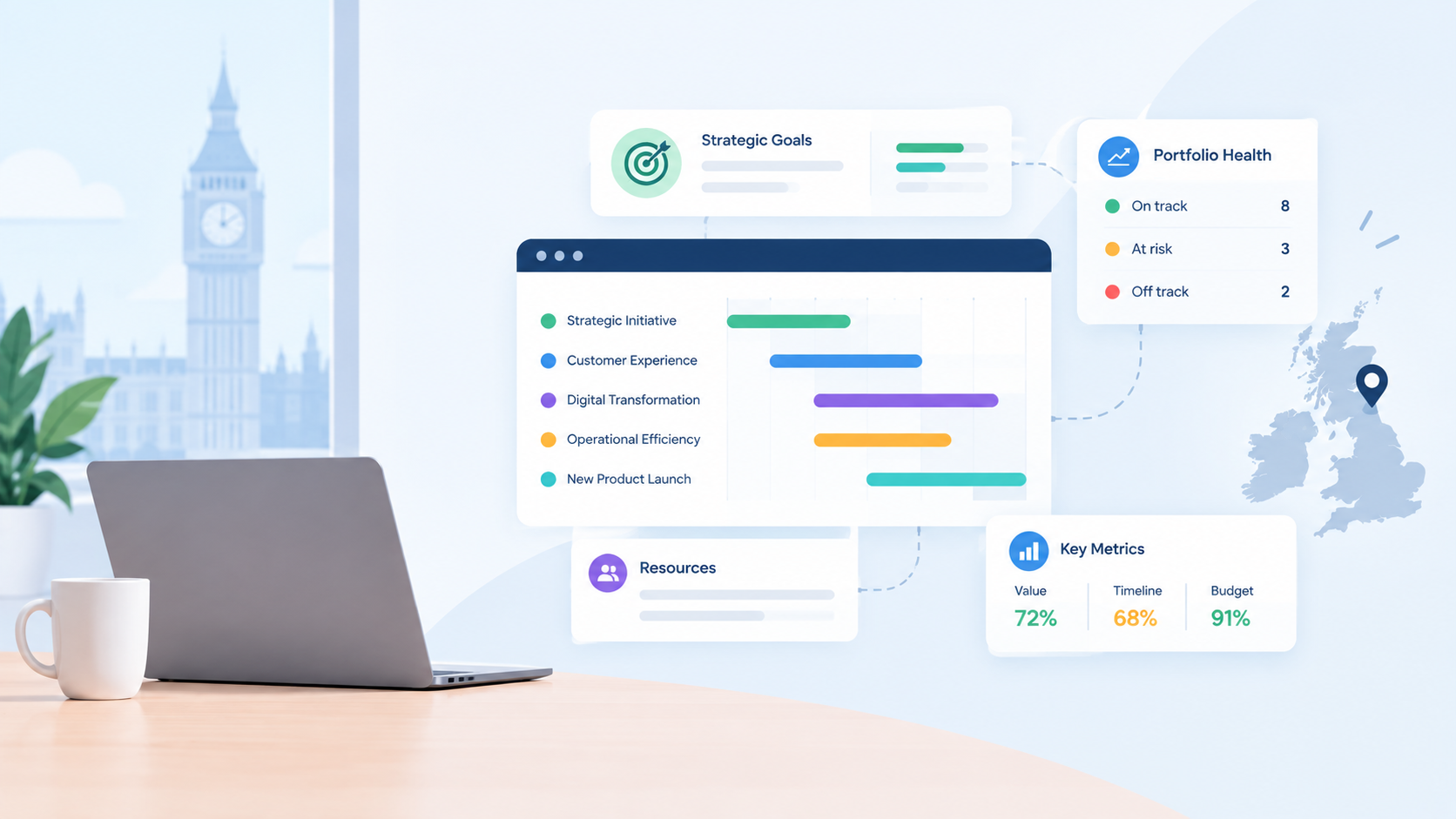
Being under budget feels like winning. It's the easiest number in any project report to point to, and the least useful one on its own — because it says nothing about whether the money went to the right portfolio.
Finance and PMO reporting both tend to ask: are we spending what we planned to spend? It's an important question, and it's answerable in minutes. It's also a question that a perfectly executed, entirely misaligned portfolio can pass with ease.
The better question takes longer to answer, which is exactly why most reports skip it: is our spend still going where our strategy said it should?
Why the gap exists
Budget tracking and strategic alignment usually live in different systems, owned by different teams, reconciled at different points in the calendar. Finance reports spend-to-budget monthly. Strategy gets reviewed quarterly, sometimes annually. Between those two cycles, a project can be perfectly on budget and drifting entirely from the objective it was funded against — for months — before anyone notices.
This matters most in regulated, transformation-heavy sectors. Finance and Insurance organisations navigating mergers, acquisitions, and infrastructure overhauls carry exactly this risk: multiple funded workstreams, each individually accountable to finance, none individually accountable to the strategy that justified the spend.
What it costs
Budget gets spent. Headcount burns out delivering it. At board level, "we were on budget" becomes a defence that doesn't answer the actual question being asked, which is whether the spend was worth it.
What closes the gap
- Budget vs. actual, shown at the portfolio level, not just per project — so variance is visible in the context of the outcome it was meant to fund.
- Financial health tracked alongside objective health, not as a separate report reconciled later — the same blind spot covered in why RAG status alone misleads executives.
- One place both finance and PMO reporting look at, so the two functions stop discovering the gap independently, months apart.
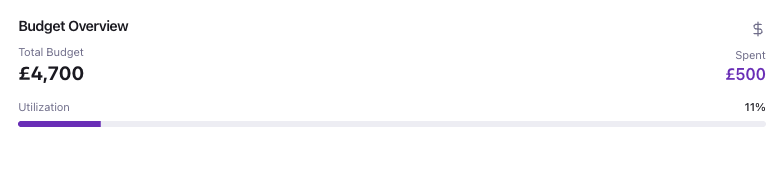
Project Director's Budget Overview and Portfolio Financial Health sit on the same Home dashboard as objective and KPI status, because "on budget" should never be reported without "on strategy" standing next to it.
Try Project Director for 14 Days for free
On-budget is a delivery answer. The board is asking a strategy question. Give them both numbers on the same page, and "we were under budget" stops being used to dodge the harder one.
Put budget and strategic alignment on the same report. Try Project Director for 14 days for free.