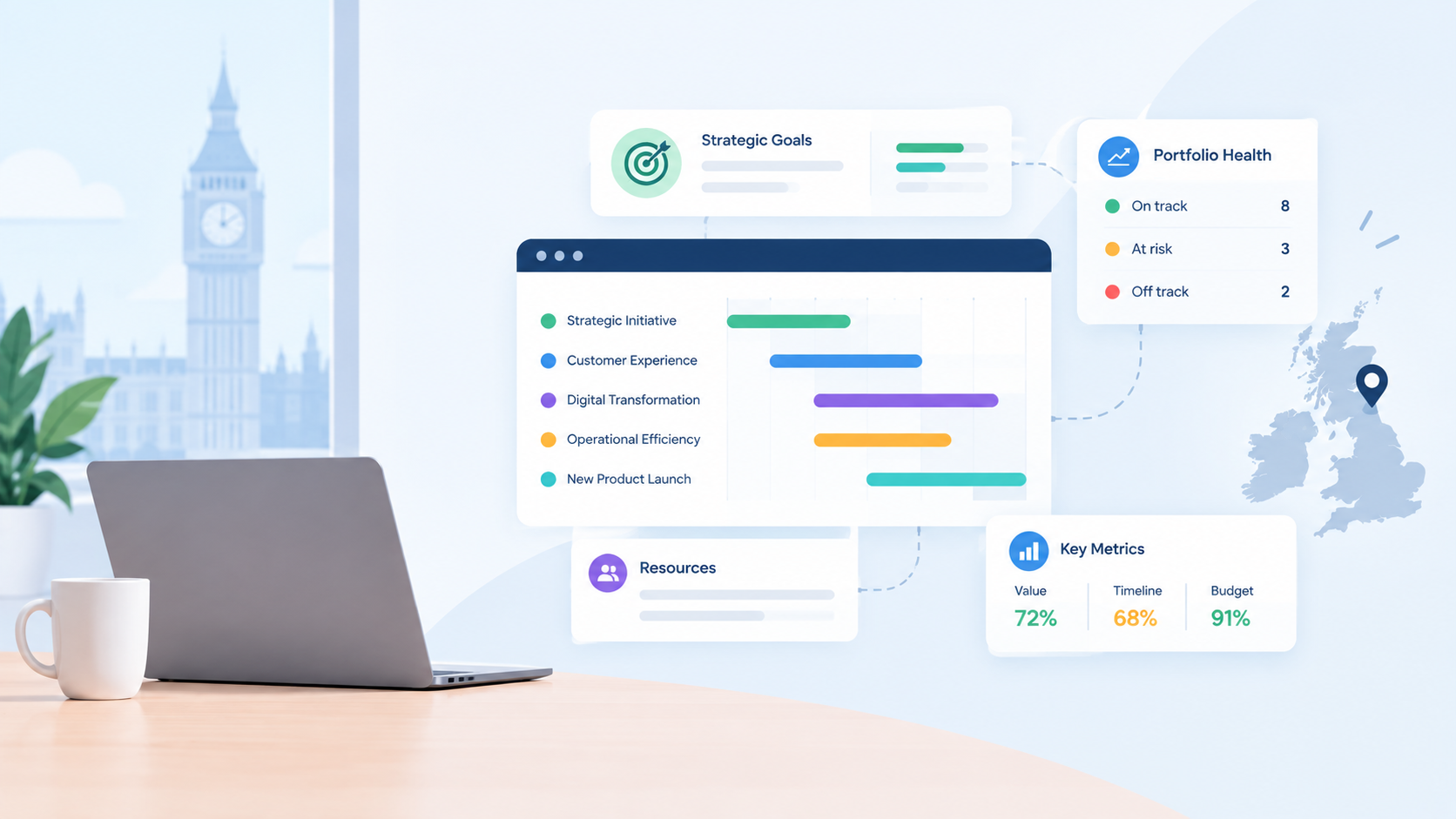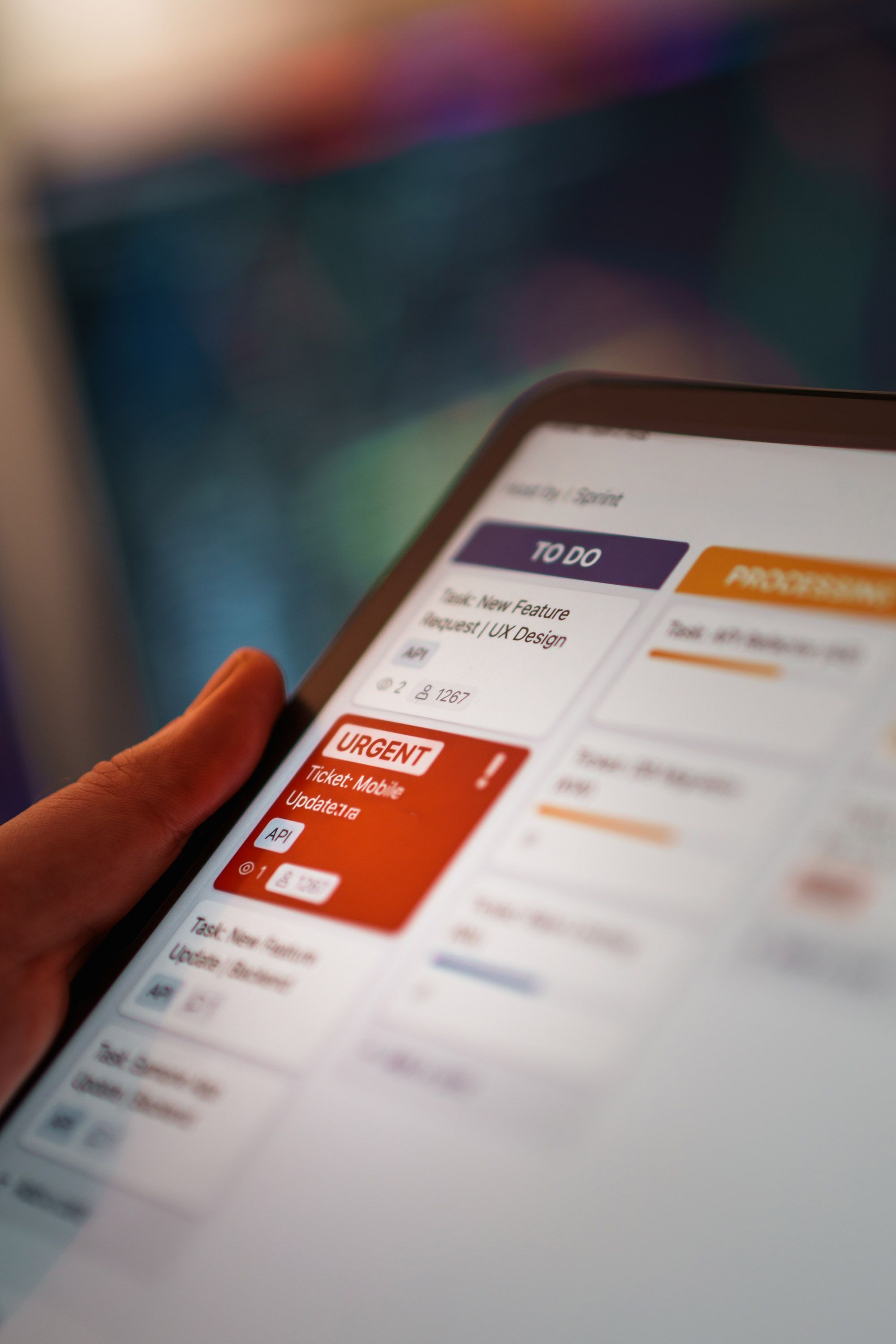

Task management software, such as Asana or Monday.com, helps teams track and complete individual pieces of work: who is assigned what, by when, and what's blocking it. PPM (project portfolio management) software helps a PMO decide which work should be funded in the first place, then tracks whether that work, taken as a whole, is still delivering the strategic objectives it was approved for.
Both categories get called "project software", which is where the confusion starts. They are not competing for the same job. One optimises how fast work gets done. The other answers whether it was the right work to do. Understanding the difference matters before you buy either one, because most PMOs eventually need both, and buying the wrong one first is an expensive way to find that out.
On this page
- The core difference, in one sentence
- What task management software is built for
- What PPM software is built for
- Feature comparison: what each category actually supports
- Signs your PMO has outgrown task management software
- Do you need to replace task management software, or add PPM software?
- What to check before buying either category
The core difference, in one sentence
Task management software is built bottom-up, starting with the to-do list. PPM software is built top-down, starting with the strategic objective. That single design decision shapes almost everything else about what each category can and cannot do.
What task management software is built for
Tools like Asana and Monday.com excel at a specific job: making individual work visible and collaborative. Assign a task, set a due date, track completion, comment on progress, see a Kanban board or Gantt view of a single project's timeline.
This is genuinely valuable work, and most organisations will always need some version of it. The limitation is not that task management software does its job badly. It is that its job stops at the edge of a single project. It was never built to hold a strategic objective as a structured object, link that objective to a KPI, or show whether a fully completed, on-time project actually moved the number it was funded to move.
What PPM software is built for
PPM software operates one level up. Instead of starting with tasks, it starts with objectives and KPIs, then links portfolios, programmes, and projects underneath them so the connection from strategy to delivery is structural, not something rebuilt manually in a spreadsheet before every board meeting.
That structure enables a different set of capabilities: portfolio-wide resource capacity tracking, a gated ideas pipeline that scores new work against strategic fit before it consumes budget, and executive dashboards that show objective health, KPI status, and financial performance across the whole organisation in one view.
Feature comparison: what each category actually supports
| Capability | Task management software | PPM software |
|---|---|---|
| Assign and track individual tasks | Yes | Usually, at project level |
| Strategy-to-delivery linkage | No | Yes |
| Objectives management | No | Yes |
| KPI tracking linked to portfolios | No | Yes |
| Portfolio management | Limited or none | Yes |
| Programme management | No | Yes |
| Ideas pipeline with strategic scoring | No | Yes |
| Cross-portfolio resource capacity | Limited | Yes |
| Executive RAG status across all projects | No | Yes |
| Budget vs. actual tracking at portfolio level | No | Yes |
This is not a criticism of task management tools. Asana and Monday.com have huge customer bases and large teams behind them precisely because they do their specific job well. The gap only becomes a problem when an organisation tries to make a task manager answer a portfolio-level question it was never designed to hold.
Signs your PMO has outgrown task management software
A few patterns tend to show up right before an organisation realises it needs PPM software rather than a better task manager:
You are building a portfolio view manually, every quarter, in a spreadsheet. If someone is copying status out of multiple project boards into a separate deck before every board meeting, the underlying tool cannot hold that view natively.
Resource over-allocation is only visible after it becomes a problem. Task management software typically shows allocation within one project. It rarely shows that a team member is fully booked across five different projects at once until deadlines start slipping.
You cannot show which projects are still linked to this year's strategy. If that question requires cross-referencing a project list against a strategy deck by hand, the tool is not holding that link for you.
New work gets approved without a structured evaluation against strategic fit. Task management software has no natural place for an ideas pipeline. Anything that gets added to a board becomes a tracked task, whether or not it should have been funded.
Do you need to replace task management software, or add PPM software?
Most organisations do not need to rip out their task management tool. The two categories solve different problems and can run in parallel during a transition, with task management handling day-to-day execution and PPM software handling portfolio-level prioritisation and strategic reporting.
That said, many PMOs find that once the strategic alignment gap becomes visible through a dedicated PPM platform, the case for consolidating reporting onto one system becomes clear on its own. Running two disconnected tools long-term tends to recreate the same manual reconciliation problem PPM software was meant to remove.
What to check before buying either category
If you are evaluating task management software, check it genuinely supports how your teams collaborate day to day: task assignment, comments, timeline views, integrations with tools they already use.
If you are evaluating PPM software, check for the four capabilities that separate real PPM tools from task managers with a portfolio label added on: objectives and KPIs as structured, linked data, a governed ideas pipeline, portfolio-wide resource visibility, and executive reporting that does not require manual assembly.
Project Director was built specifically for the second category. It connects strategy (goals, objectives, KPIs) directly to delivery (portfolios, programmes, projects), which is the layer task management software was never designed to hold.
The practical takeaway
Task management software and PPM software are not two versions of the same tool at different price points. One tracks whether work gets done. The other tracks whether the work being done is still the work your strategy needs. Most PMOs eventually need both, and knowing which gap you are actually trying to close is the first decision to get right before you buy either one.
See whether your portfolio still matches your strategy. Take the free 14-day evaluation.