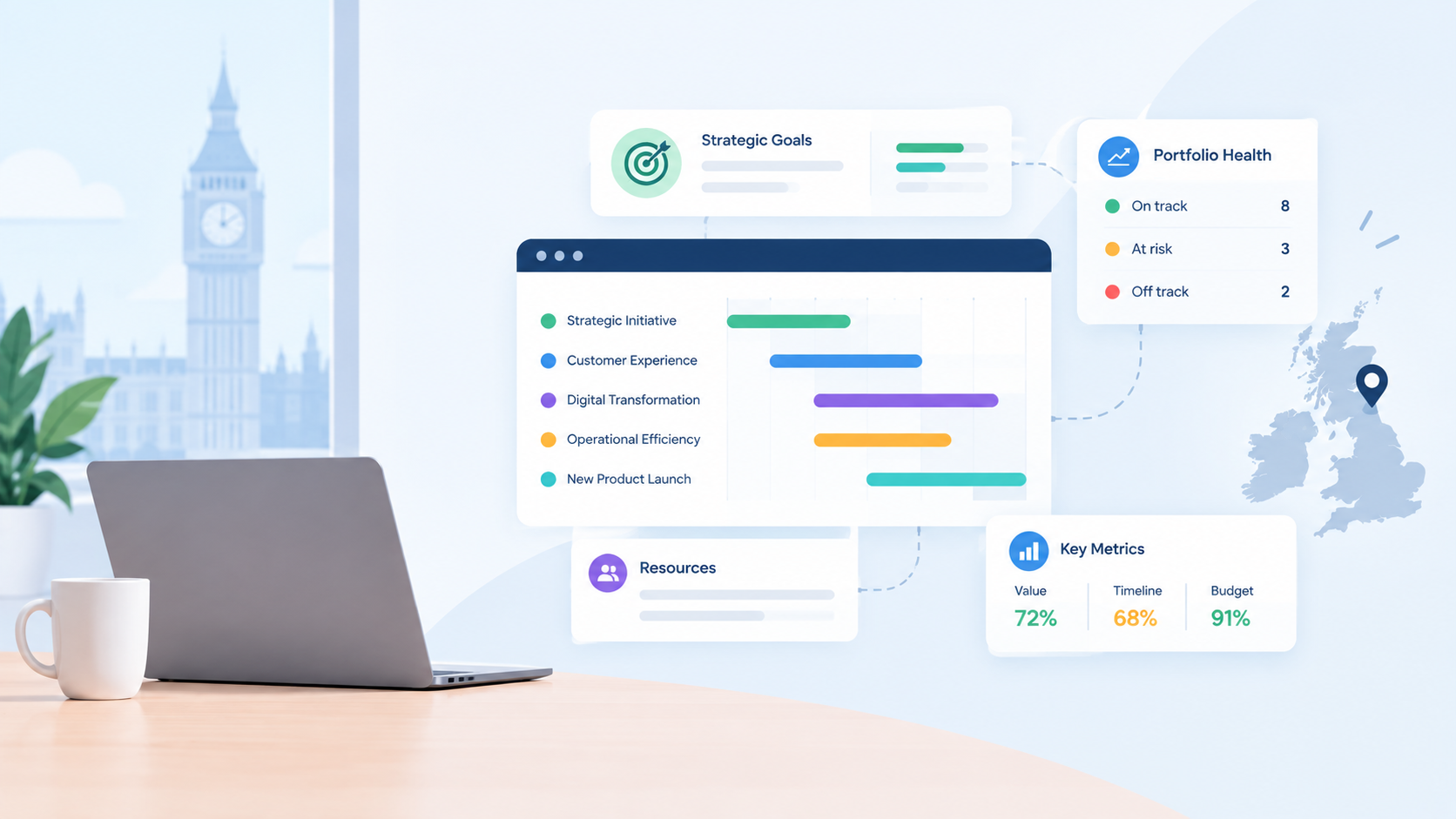

A single-division company can get away with one strategy deck and one portfolio view. A national organisation with ten divisions, each with its own P&L, cannot — and most project tools were never built to acknowledge the difference.
"How do we standardise PMO reporting?" is the question most multi-divisional organisations end up asking, because their existing tools force every division into one flat project list. Standardising the report doesn't fix the underlying problem: the divisions don't actually share one strategy. They share a name. Getting clear on what a PMO actually owns end to end is what makes that standardisation possible.
The better question: does each division's portfolio reflect its own strategic objectives, in a way that still rolls up to something the group board can read in one sitting?
Why flat tools break at scale
Most task-management platforms have one native layer: the project. Add a division, a regional split, or a business unit boundary, and the tool copes by adding tags, folders, or a second workspace nobody keeps in sync. The structure isn't wrong for a single team. It collapses the moment an organisation has genuinely separate strategic agendas running in parallel — which is exactly the shape of the large, high-visibility portfolios found at national infrastructure and utilities organisations.
What it costs
Without a real organisational anchor above the project layer, group-level reporting becomes a manual reconciliation exercise every quarter — someone, somewhere, stitching ten divisional spreadsheets into one deck the board can sit through. It's slow, it's error-prone, and it quietly discourages divisions from tracking objectives at all, because the tracking doesn't lead anywhere useful.
What a real structure looks like
- A Business Unit as the actual organisational anchor, not a tag, a genuine container that objectives, KPIs, portfolios, programmes and projects all sit beneath.
- Each Business Unit able to define its own objectives and KPIs, owned locally, without losing visibility to the centre.
- A group view that rolls every Business Unit up into one picture, without anyone manually copying numbers between spreadsheets.
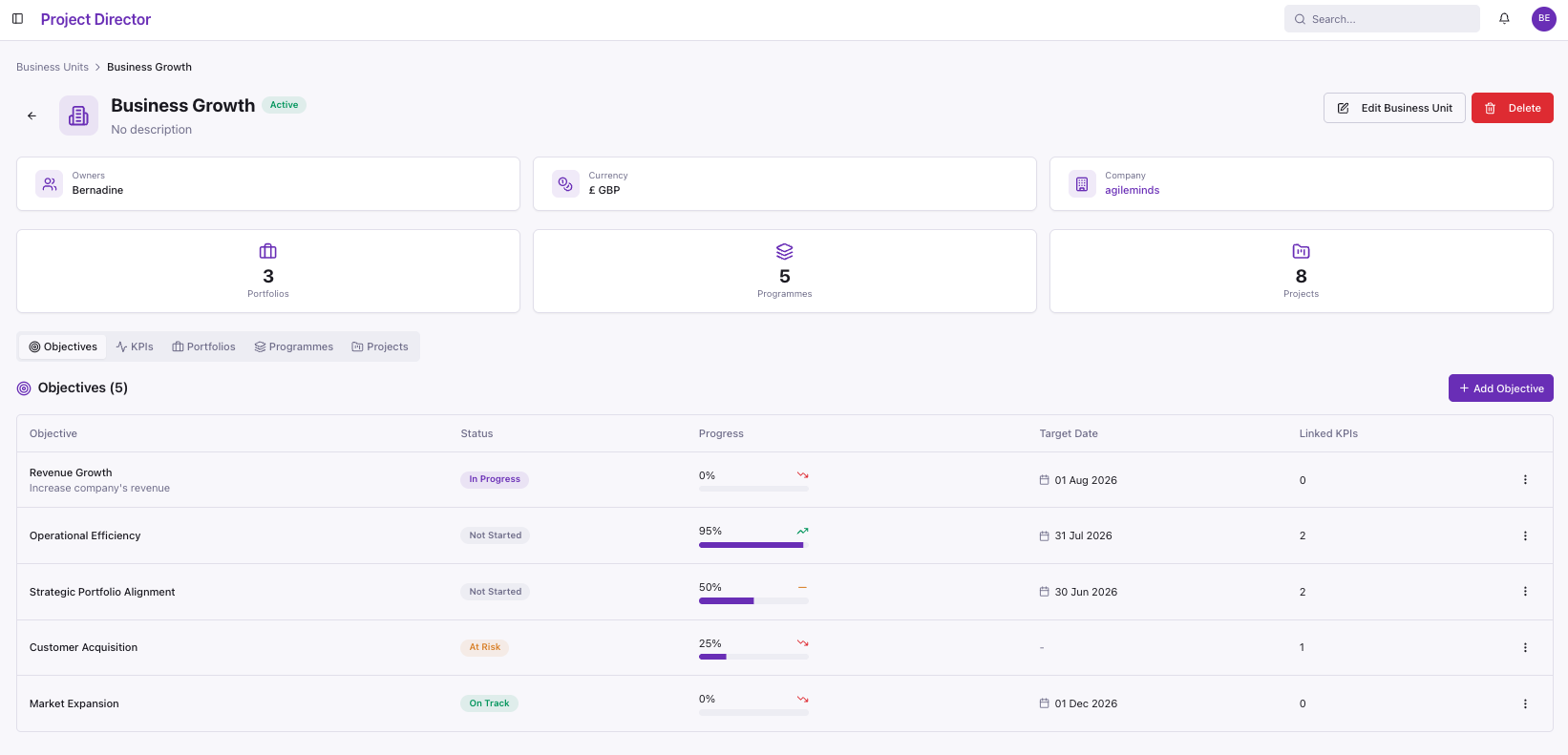
This is the exact job Project Director's Business Unit structure does, an organisational anchor above the portfolio layer, so a ten-division group and a fifty-person single-BU company both get a structure that fits, without either one being forced to pretend they're the other.
Try Project Director for 14 Days for free
The problem was never "which project tool should the whole group use?" It was "does our tool understand that we're not one team." Structure the tool around the organisation you actually are, and the reporting problem mostly solves itself.
See how a multi-division portfolio rolls up to one board view.